ESP-NOW
Comunicación inalámbrica punto a punto y multipunto de ultra baja latencia sin router entre microcontroladores ESP32 con control de LEDs mediante pulsadores.
Enunciado de la Tarea
Documentación técnica completa del protocolo ESP-NOW (protocolo propietario desarrollado por Espressif Systems que opera sobre la capa MAC en la banda de 2.4 GHz sin necesidad de punto de acceso Wi-Fi ni enrutador), análisis de sus topologías de conexión y el desarrollo práctico de un transceptor con pulsadores y diodos LED indicadores.
¿Qué es ESP-NOW y Cómo Funciona?
ESP-NOW es un protocolo de red inalámbrica optimizado por Espressif para comunicaciones locales de alta velocidad, respuesta inmediata y mínimo consumo energético. A diferencia de la pila TCP/IP tradicional:
30:AE:A4:07:0F:70) para envíos Unicast o Broadcast.
Topologías Soportadas por ESP-NOW
La flexibilidad de ESP-NOW permite crear arquitecturas adaptadas a cualquier proyecto de electrónica o domótica:
- 1 a 1 (Punto a Punto): Comunicación directa entre un mando emisor y un receptor.
- Muchos a 1 (Concentrador): Diversos nodos sensores repartidos envían mediciones a una estación central.
- 1 a Muchos (Difusión): Un controlador maestro envía comandos de acción o sincronización a múltiples actuadores.
- Muchos a Muchos (Malla): Todos los módulos ESP32 intercambian información bidireccional entre sí.
Montaje Real en Protoboard y Comportamiento
Fotografías del Montaje Real en Protoboard
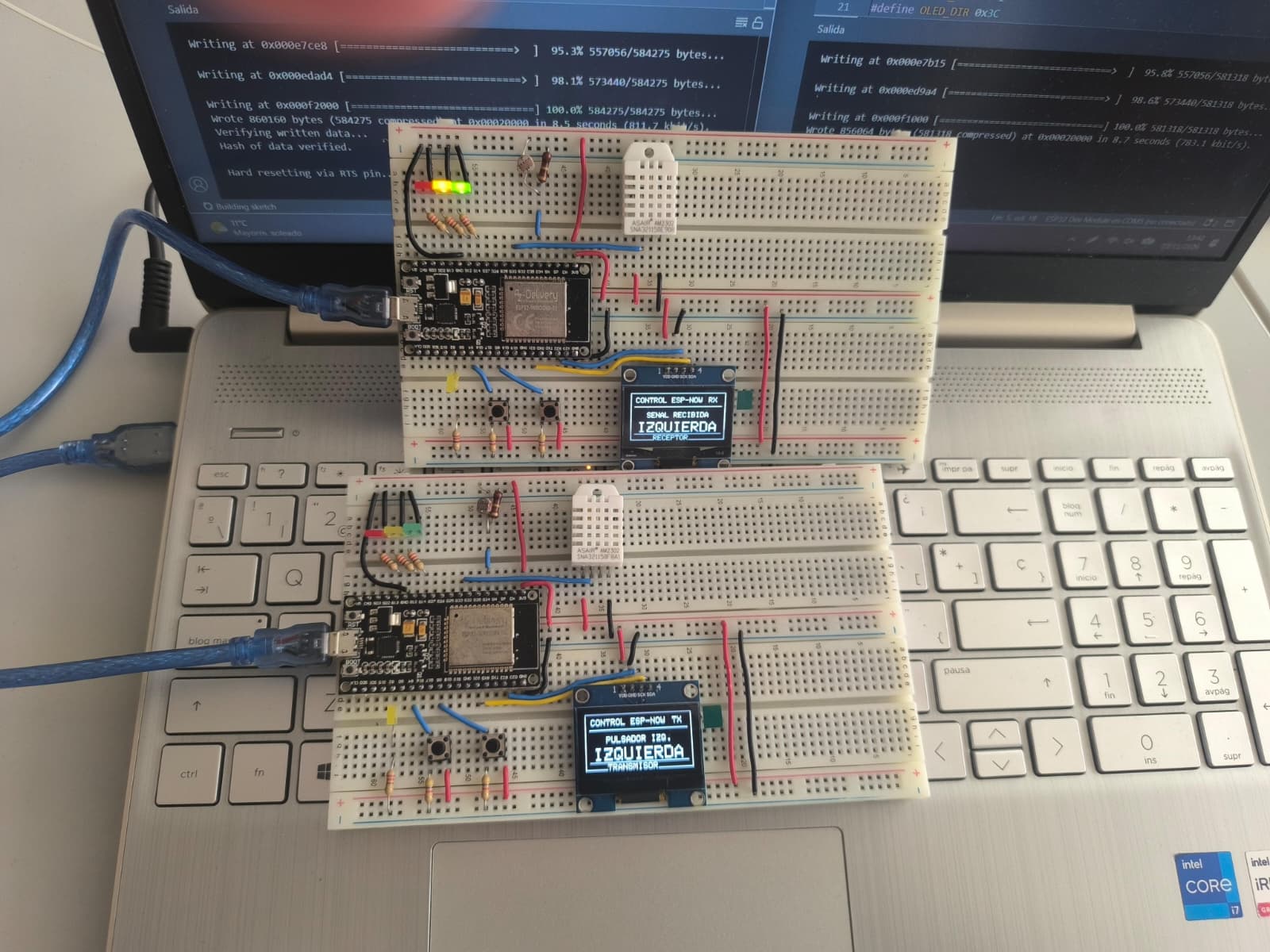
IZQUIERDA y el receptor RX enciende el LED Verde (fijo) e inicia el parpadeo del LED Amarillo.
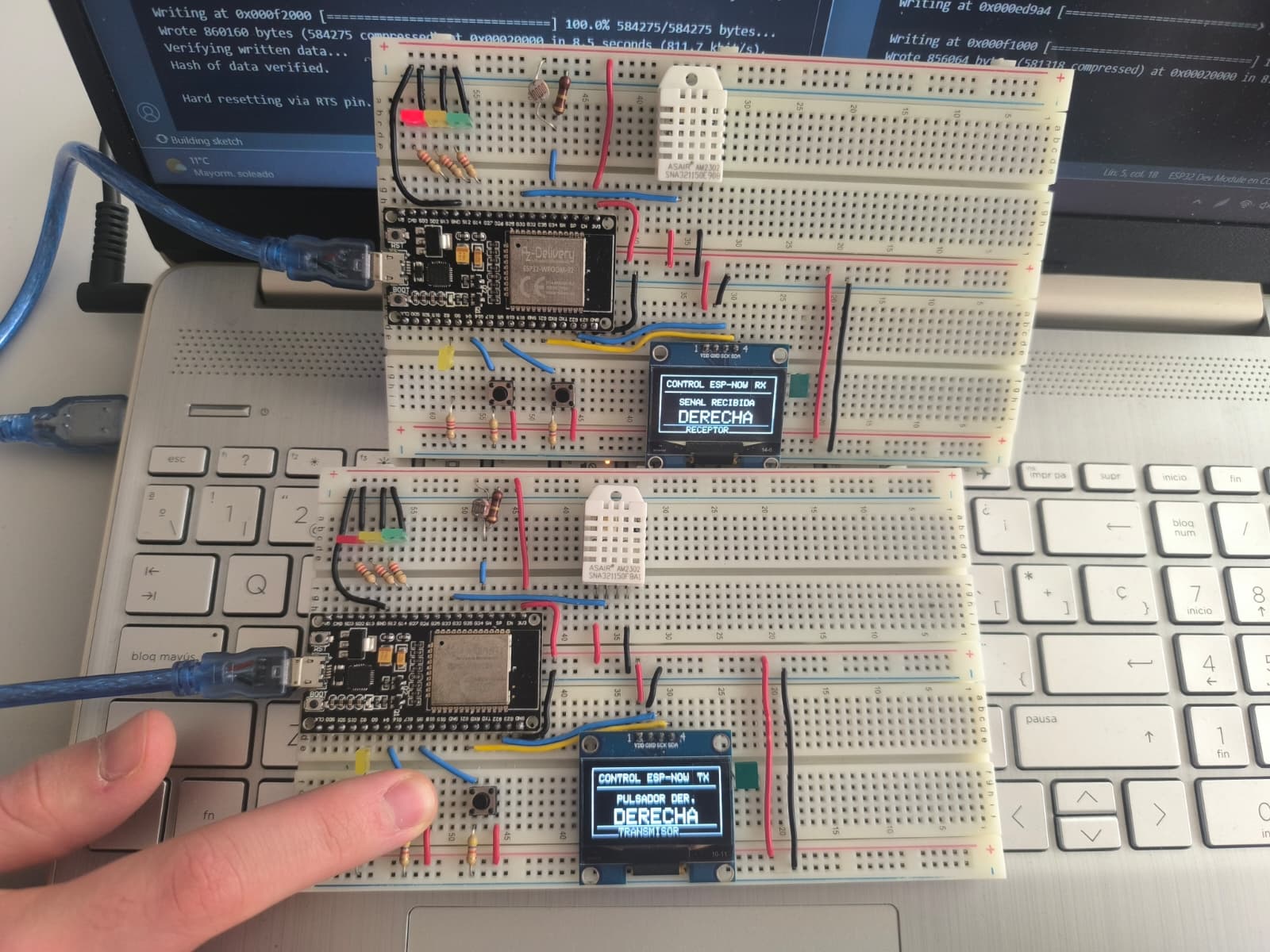
DERECHA y el receptor conmuta apagando Verde/Amarillo y encendiendo únicamente el LED Rojo fijo.
Demostración en Vídeo del Funcionamiento
Tabla de Respuesta de los LEDs en el Receptor
| Acción en el Emisor (TX) | LED Verde (GPIO 14) | LED Amarillo (GPIO 12) | LED Rojo (GPIO 13) |
|---|---|---|---|
| Pulsador 1 (Izquierda) presionado | ENCENDIDO FIJO | PARPADEANDO (BLINK 180ms) | APAGADO |
| Pulsador 2 (Derecha) presionado | APAGADO | APAGADO | ENCENDIDO FIJO |
| Reposo / Pérdida de Señal (> 700ms) | APAGADO | APAGADO | APAGADO |
Distribución de Pines y Componentes
| Placa ESP32 | Componente Conectado | Pin GPIO | Configuración y Modo de Operación |
|---|---|---|---|
| ESP32 Emisor | Pulsador 1 (Izquierda) | GPIO 4 | INPUT_PULLUP (Activo a nivel bajo GND al pulsar) |
| ESP32 Emisor | Pulsador 2 (Derecha) | GPIO 5 | INPUT_PULLUP (Activo a nivel bajo GND al pulsar) |
| ESP32 Emisor / Receptor | Pantalla OLED SH1106 I2C | GPIO 21 (SDA) / 22 (SCL) | I2C a 100 kHz (Dirección 0x3C) |
| ESP32 Receptor | Diodo LED Verde | GPIO 14 | OUTPUT (Nivel alto 3.3V con comando 1) |
| ESP32 Receptor | Diodo LED Amarillo | GPIO 12 | OUTPUT (Conmutación con millis() en comando 1) |
| ESP32 Receptor | Diodo LED Rojo | GPIO 13 | OUTPUT (Nivel alto 3.3V con comando 2) |
Corrección del Error de Compilación en Arduino IDE 2.3+ / ESP32 Core v3.x
Al actualizar el paquete de tarjetas ESP32 en Arduino IDE a las versiones Core 3.x (basadas en ESP-IDF v5.x), el compilador genera un error de conversión en los callbacks de envío y recepción:
void OnDataRecv(const uint8_t *mac, const uint8_t *incomingData, int len)
void OnDataRecv(const esp_now_recv_info_t *recv_info, const uint8_t *incomingData, int len)
Descarga de Fuentes del Proyecto
Descarga los bocetos de código fuente listos para compilar en Arduino IDE:
Código 1: ESP32 Emisor (Pulsadores y OLED)
El emisor configura los GPIO 4 y 5 en modo INPUT_PULLUP, gestiona la interfaz gráfica en la pantalla OLED SH1106 mediante I2C y transmite paquetes continuos por ESP-NOW al receptor:
#include <Arduino.h>
#include <WiFi.h>
#include <esp_now.h>
#include <esp_wifi.h>
#include <Wire.h>
#include <Adafruit_GFX.h>
#include <Adafruit_SH110X.h>
#include <cstring>

// ---------------- CONFIGURACION ----------------
#define CANAL_WIFI 1

#define BTN_IZQ 4
#define BTN_DER 5

#define OLED_ANCHO 128
#define OLED_ALTO 64
#define OLED_RESET -1
#define OLED_DIR 0x3C

Adafruit_SH1106G display(OLED_ANCHO, OLED_ALTO, &Wire, OLED_RESET);

uint8_t macReceptor[] = {0xFF, 0xFF, 0xFF, 0xFF, 0xFF, 0xFF};

typedef struct {
  uint8_t comando;
} Mensaje;

Mensaje datosEnvio;
unsigned long ultimoEnvio = 0;
uint8_t comandoAnterior = 255;
bool oledDisponible = false;

// ---------------- TEXTO CENTRADO ----------------
void textoCentrado(const char* texto, int y, int tamano) {
  display.setTextSize(tamano);
  int ancho = strlen(texto) * 6 * tamano;
  int x = (OLED_ANCHO - ancho) / 2;
  display.setCursor(x, y);
  display.print(texto);
}

// ---------------- CONFIGURACION OLED ----------------
void iniciarOLED() {
  Wire.begin(21, 22);
  Wire.setClock(100000);

  oledDisponible = display.begin(OLED_DIR, true);

  if (!oledDisponible) {
    Serial.println("ERROR: NO SE DETECTA LA OLED");
    return;
  }

  display.clearDisplay();
  display.display();
  delay(50);

  display.setRotation(0);
  display.setTextColor(SH110X_WHITE, SH110X_BLACK);
  display.setTextWrap(false);

  display.clearDisplay();
  display.drawRect(0, 0, 128, 64, SH110X_WHITE);
  textoCentrado("INICIANDO", 19, 2);
  textoCentrado("ESP32 EMISOR", 43, 1);
  display.display();
  delay(1200);
}

// ---------------- ACTUALIZAR PANTALLA ----------------
void actualizarPantalla(uint8_t comando) {
  if (!oledDisponible) return;

  display.clearDisplay();
  display.drawRect(0, 0, 128, 64, SH110X_WHITE);

  display.setTextSize(1);
  display.setCursor(7, 6);
  display.print(F("CONTROL ESP-NOW"));
  display.setCursor(105, 6);
  display.print(F("TX"));
  display.drawLine(5, 18, 122, 18, SH110X_WHITE);

  if (comando == 1) {
    textoCentrado("PULSADOR IZQ.", 26, 1);
    textoCentrado("IZQUIERDA", 39, 2);
  } else if (comando == 2) {
    textoCentrado("PULSADOR DER.", 26, 1);
    textoCentrado("DERECHA", 39, 2);
  } else {
    textoCentrado("SISTEMA ACTIVO", 26, 1);
    textoCentrado("ESPERANDO", 39, 2);
  }

  display.drawLine(5, 55, 122, 55, SH110X_WHITE);
  display.setTextSize(1);
  display.setCursor(26, 57);
  display.print(F("TRANSMISOR"));
  display.display();
}

// ---------------- SETUP ----------------
void setup() {
  Serial.begin(115200);

  pinMode(BTN_IZQ, INPUT_PULLUP);
  pinMode(BTN_DER, INPUT_PULLUP);

  iniciarOLED();

  WiFi.mode(WIFI_STA);
  WiFi.disconnect();
  delay(100);

  Serial.println("\n=== EMISOR ESP-NOW ===");
  Serial.print("MAC: ");
  Serial.println(WiFi.macAddress());

  if (esp_wifi_set_channel(CANAL_WIFI, WIFI_SECOND_CHAN_NONE) != ESP_OK) {
    Serial.println("ERROR CONFIGURANDO CANAL");
    while (true) delay(1000);
  }

  if (esp_now_init() != ESP_OK) {
    Serial.println("ERROR INICIANDO ESP-NOW");
    while (true) delay(1000);
  }

  esp_now_peer_info_t peerInfo = {};
  memcpy(peerInfo.peer_addr, macReceptor, 6);
  peerInfo.channel = CANAL_WIFI;
  peerInfo.encrypt = false;
  peerInfo.ifidx = WIFI_IF_STA;

  if (!esp_now_is_peer_exist(macReceptor)) {
    if (esp_now_add_peer(&peerInfo) != ESP_OK) {
      Serial.println("ERROR REGISTRANDO RECEPTOR");
      while (true) delay(1000);
    }
  }

  Serial.println("EMISOR PREPARADO");
  actualizarPantalla(0);
}

// ---------------- LOOP ----------------
void loop() {
  bool izquierda = digitalRead(BTN_IZQ) == LOW;
  bool derecha = digitalRead(BTN_DER) == LOW;
  uint8_t comando = 0;

  if (izquierda) comando = 1;
  else if (derecha) comando = 2;

  datosEnvio.comando = comando;

  if (millis() - ultimoEnvio >= 100) {
    esp_err_t resultado = esp_now_send(macReceptor, (uint8_t*)&datosEnvio, sizeof(datosEnvio));
    if (resultado != ESP_OK) {
      Serial.print("ERROR ENVIO: ");
      Serial.println(esp_err_to_name(resultado));
    }
    ultimoEnvio = millis();
  }

  if (comando != comandoAnterior) {
    actualizarPantalla(comando);
    comandoAnterior = comando;
  }

  delay(10);
}
Código 2: ESP32 Receptor (LEDs y OLED)
El receptor captura las tramas mediante la rutina de interrupción de ESP-NOW de forma segura con exclusión mutua (portMUX_TYPE), controla los 3 LEDs indicadores sin bloqueos mediante millis() y gestiona el Timeout por desconexión:
#include <Arduino.h>
#include <WiFi.h>
#include <esp_now.h>
#include <esp_wifi.h>
#include <Wire.h>
#include <Adafruit_GFX.h>
#include <Adafruit_SH110X.h>
#include <cstring>

// ---------------- CONFIGURACION ----------------
#define CANAL_WIFI 1

#define LED_VERDE 14
#define LED_AMARILLO 12
#define LED_ROJO 13

#define OLED_ANCHO 128
#define OLED_ALTO 64
#define OLED_RESET -1
#define OLED_DIR 0x3C

#define TIEMPO_ESPERA 700

Adafruit_SH1106G display(OLED_ANCHO, OLED_ALTO, &Wire, OLED_RESET);

typedef struct {
  uint8_t comando;
} Mensaje;

// Comunicacion
volatile uint8_t comandoActual = 0;
volatile unsigned long ultimoMensaje = 0;
volatile bool mensajeRecibido = false;

portMUX_TYPE mux = portMUX_INITIALIZER_UNLOCKED;

bool oledDisponible = false;
uint8_t comandoAnteriorPantalla = 255;
bool senalAnterior = false;

uint8_t comandoAnteriorLED = 255;
unsigned long tiempoBlink = 0;
bool estadoAmarillo = false;

// ---------------- TEXTO CENTRADO ----------------
void textoCentrado(const char* texto, int y, int tamano) {
  display.setTextSize(tamano);
  int ancho = strlen(texto) * 6 * tamano;
  int x = (OLED_ANCHO - ancho) / 2;
  display.setCursor(x, y);
  display.print(texto);
}

// ---------------- CONFIGURACION OLED ----------------
void iniciarOLED() {
  Wire.begin(21, 22);
  Wire.setClock(100000);

  oledDisponible = display.begin(OLED_DIR, true);

  if (!oledDisponible) {
    Serial.println("ERROR: NO SE DETECTA LA OLED");
    return;
  }

  display.clearDisplay();
  display.display();
  delay(50);

  display.setRotation(0);
  display.setTextColor(SH110X_WHITE, SH110X_BLACK);
  display.setTextWrap(false);

  display.clearDisplay();
  display.drawRect(0, 0, 128, 64, SH110X_WHITE);
  textoCentrado("INICIANDO", 19, 2);
  textoCentrado("ESP32 RECEPTOR", 43, 1);
  display.display();
  delay(1200);
}

// ---------------- ACTUALIZAR PANTALLA ----------------
void actualizarPantalla(uint8_t comando, bool senal) {
  if (!oledDisponible) return;

  display.clearDisplay();
  display.drawRect(0, 0, 128, 64, SH110X_WHITE);

  display.setTextSize(1);
  display.setCursor(7, 6);
  display.print(F("CONTROL ESP-NOW"));
  display.setCursor(105, 6);
  display.print(F("RX"));
  display.drawLine(5, 18, 122, 18, SH110X_WHITE);

  if (!senal) {
    textoCentrado("SIN CONEXION", 26, 1);
    textoCentrado("ESPERANDO", 39, 2);
  } else if (comando == 1) {
    textoCentrado("SENAL RECIBIDA", 26, 1);
    textoCentrado("IZQUIERDA", 39, 2);
  } else if (comando == 2) {
    textoCentrado("SENAL RECIBIDA", 26, 1);
    textoCentrado("DERECHA", 39, 2);
  } else {
    textoCentrado("SENAL RECIBIDA", 26, 1);
    textoCentrado("REPOSO", 39, 2);
  }

  display.drawLine(5, 55, 122, 55, SH110X_WHITE);
  display.setTextSize(1);
  display.setCursor(31, 57);
  display.print(F("RECEPTOR"));
  display.display();
}

// ---------------- RECEPCION ESP-NOW ----------------
void OnDataRecv(const esp_now_recv_info_t *info, const uint8_t *datos, int longitud) {
  if (longitud != sizeof(Mensaje)) return;

  Mensaje recibido;
  memcpy(&recibido, datos, sizeof(Mensaje));

  if (recibido.comando > 2) return;

  portENTER_CRITICAL(&mux);
  comandoActual = recibido.comando;
  ultimoMensaje = millis();
  mensajeRecibido = true;
  portEXIT_CRITICAL(&mux);
}

// ---------------- SETUP ----------------
void setup() {
  Serial.begin(115200);

  pinMode(LED_VERDE, OUTPUT);
  pinMode(LED_AMARILLO, OUTPUT);
  pinMode(LED_ROJO, OUTPUT);

  digitalWrite(LED_VERDE, LOW);
  digitalWrite(LED_AMARILLO, LOW);
  digitalWrite(LED_ROJO, LOW);

  iniciarOLED();

  WiFi.mode(WIFI_STA);
  WiFi.disconnect();
  delay(100);

  Serial.println("\n=== RECEPTOR ESP-NOW ===");
  Serial.print("MAC: ");
  Serial.println(WiFi.macAddress());

  if (esp_wifi_set_channel(CANAL_WIFI, WIFI_SECOND_CHAN_NONE) != ESP_OK) {
    Serial.println("ERROR CONFIGURANDO CANAL");
    while (true) delay(1000);
  }

  if (esp_now_init() != ESP_OK) {
    Serial.println("ERROR INICIANDO ESP-NOW");
    while (true) delay(1000);
  }

  if (esp_now_register_recv_cb(OnDataRecv) != ESP_OK) {
    Serial.println("ERROR RECEPCION");
    while (true) delay(1000);
  }

  Serial.println("RECEPTOR PREPARADO");
  actualizarPantalla(0, false);
}

// ---------------- LOOP ----------------
void loop() {
  uint8_t comando;
  unsigned long ultimo;
  bool recibido;

  portENTER_CRITICAL(&mux);
  comando = comandoActual;
  ultimo = ultimoMensaje;
  recibido = mensajeRecibido;
  portEXIT_CRITICAL(&mux);

  bool senal = recibido && (millis() - ultimo <= TIEMPO_ESPERA);
  if (!senal) comando = 0;

  if (comando != comandoAnteriorLED) {
    estadoAmarillo = false;
    tiempoBlink = millis();
    comandoAnteriorLED = comando;
  }

  // ---------------- CONTROL DE LED ----------------
  switch (comando) {
    case 1:
      digitalWrite(LED_VERDE, HIGH);
      digitalWrite(LED_ROJO, LOW);

      if (millis() - tiempoBlink >= 180) {
        tiempoBlink = millis();
        estadoAmarillo = !estadoAmarillo;
        digitalWrite(LED_AMARILLO, estadoAmarillo ? HIGH : LOW);
      }
      break;

    case 2:
      digitalWrite(LED_VERDE, LOW);
      digitalWrite(LED_AMARILLO, LOW);
      digitalWrite(LED_ROJO, HIGH);
      estadoAmarillo = false;
      break;

    default:
      digitalWrite(LED_VERDE, LOW);
      digitalWrite(LED_AMARILLO, LOW);
      digitalWrite(LED_ROJO, LOW);
      estadoAmarillo = false;
      break;
  }

  if (comando != comandoAnteriorPantalla || senal != senalAnterior) {
    actualizarPantalla(comando, senal);
    comandoAnteriorPantalla = comando;
    senalAnterior = senal;
  }

  delay(5);
}